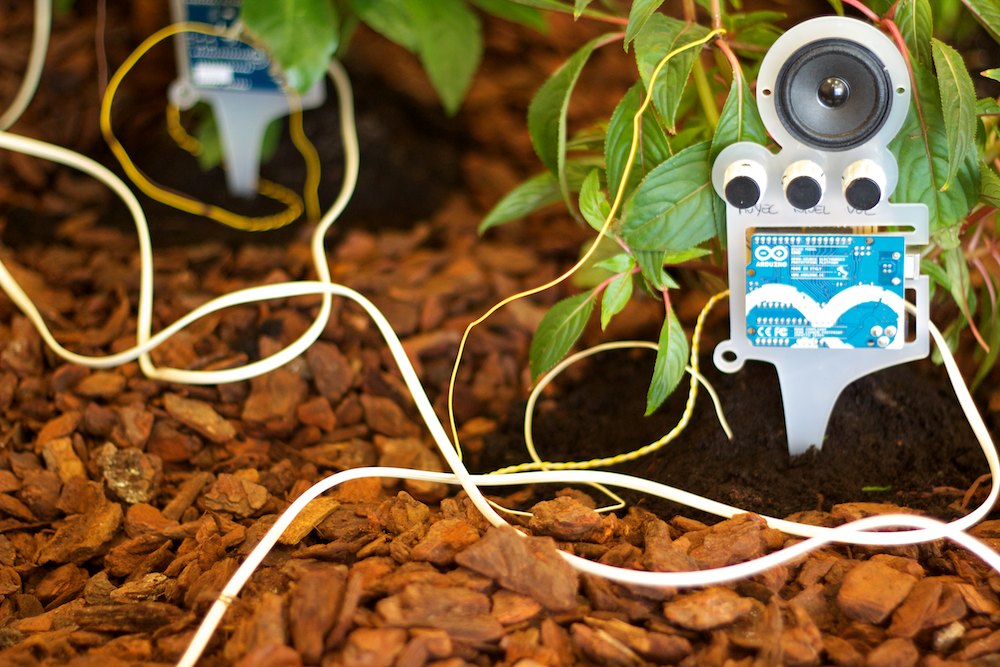
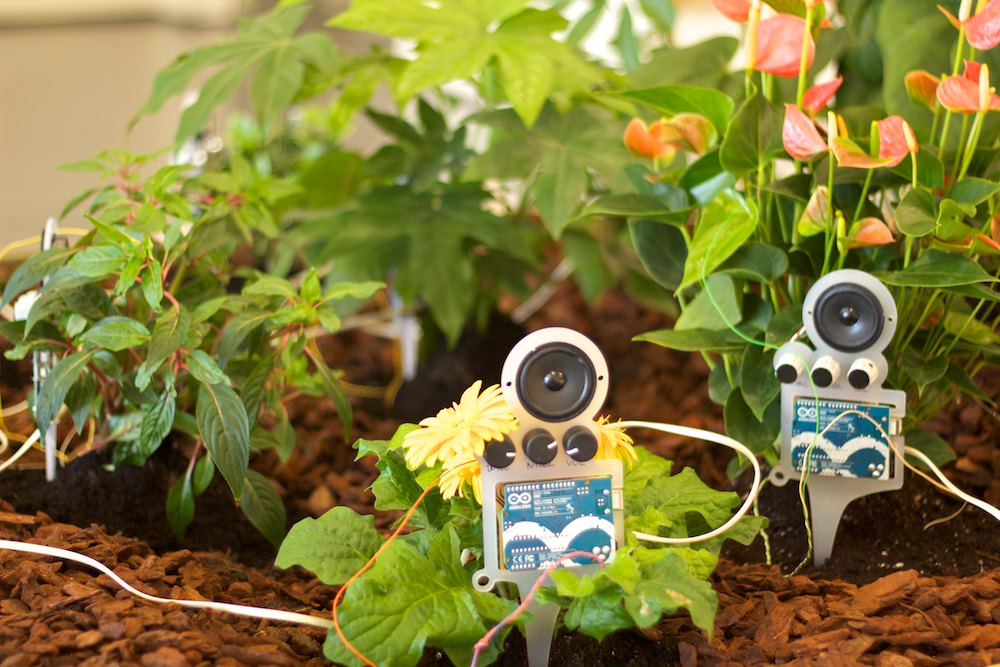
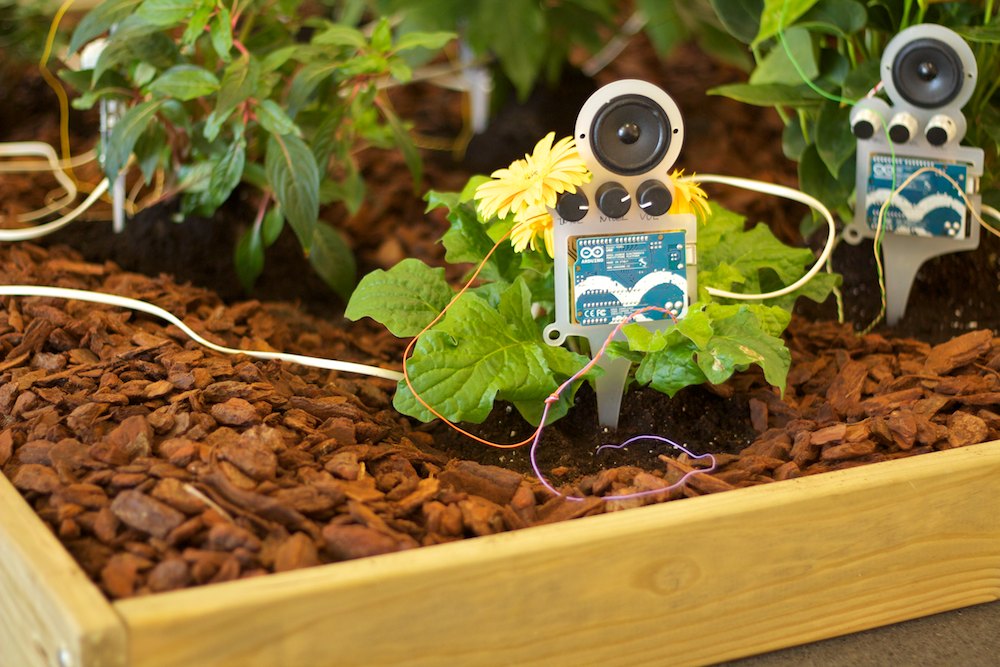
Clorofila 3.0 investigates the bioelectrical activity of plants and its translation into forms perceptible to the human senses.
Clorofila 3.0 is one of the earliest projects in our research into the perception of other organisms and the development of technological interfaces capable of expanding forms of interspecies communication.
The project investigates variations in the electrical activity of plants and their relationship with environmental conditions. To this end, we developed our own sensors and electronic systems, designed to directly register voltage fluctuations in plant organisms associated with their internal activity and with environmental factors such as temperature, air movement, pressure, or the proximity of other bodies.
Software developed specifically for the work processes these signals in real time and translates them into a sound composition. In this way, activity that is normally imperceptible to human senses is transformed into an audible experience, establishing an interface between the bioelectrical activity of plants and our own perception.
Developed in 2010, Clorofila 3.0 marks the starting point of a line of research that we have continued to develop through subsequent projects. The sensing systems, electronics, and signal-translation processes initially created for this work evolved into new interfaces and methodologies through which we investigate relationships between living organisms, technology, and the environment, while exploring other possible forms of perception and interspecies communication.