Work

Sensorial Garden

2019
← All works Work

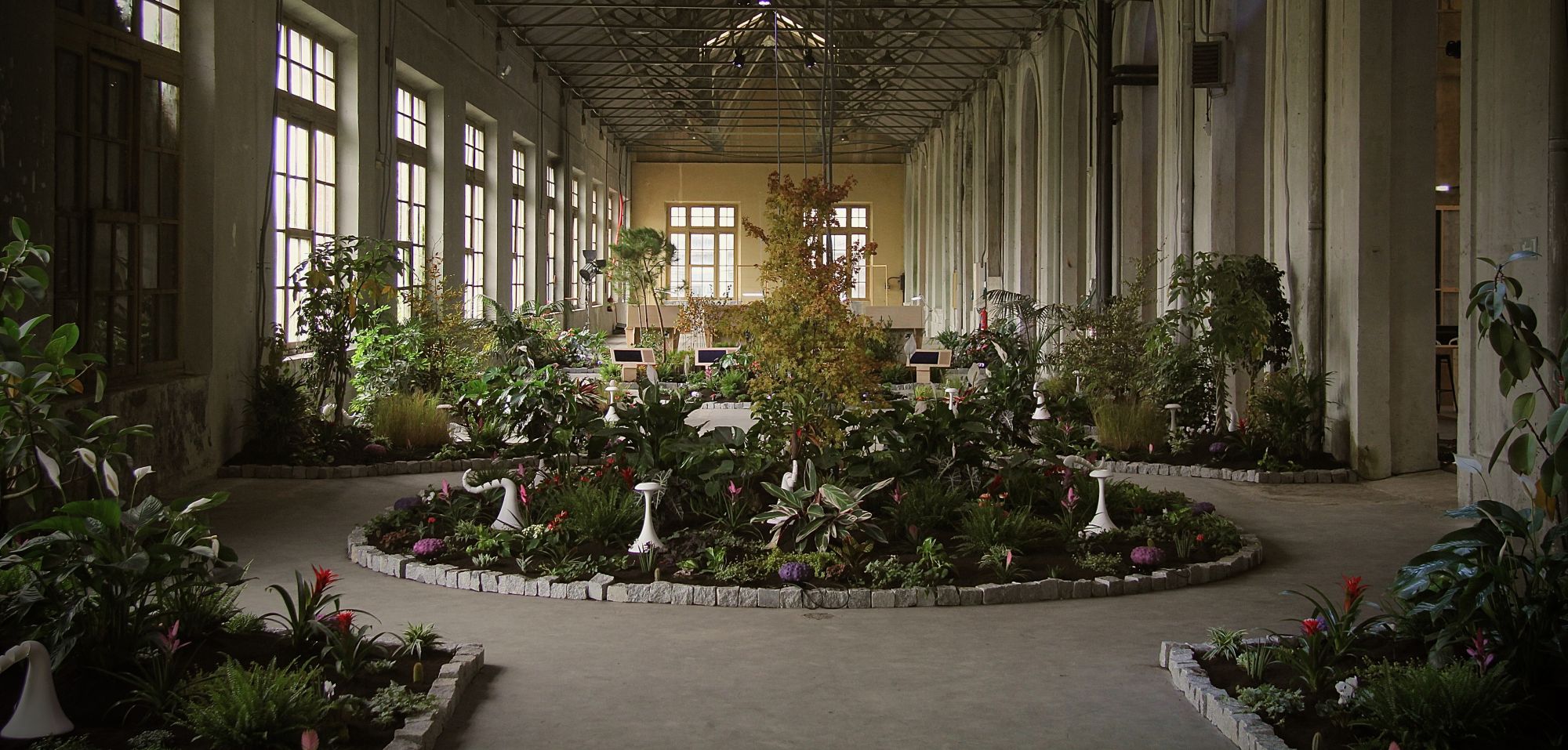
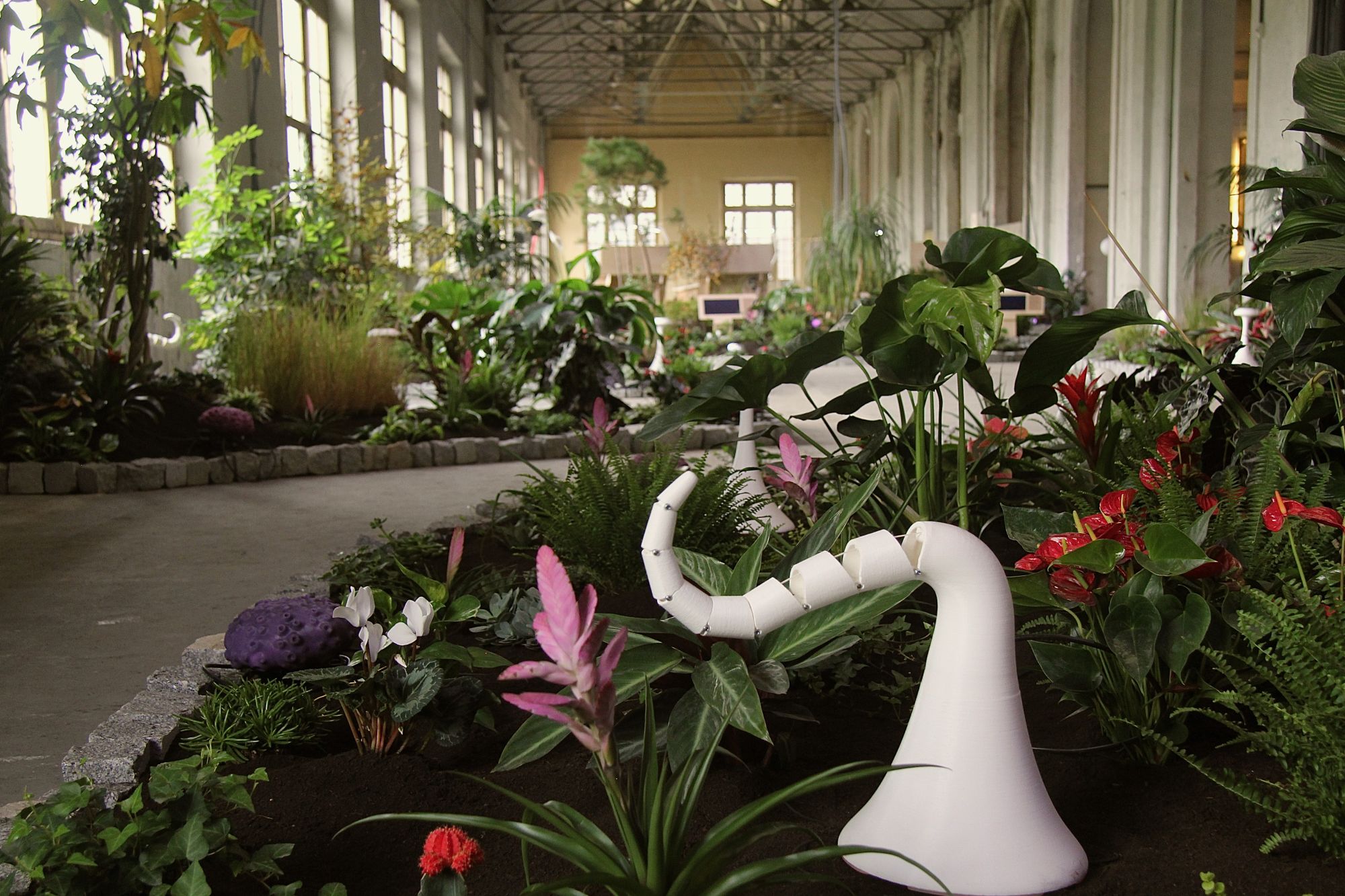
Sensory Garden is a large-scale installation conceived as a cyborg garden, commissioned by the Princess of Asturias Foundation.
CONCEPTUALIZATION | PRODUCTION | TECHNOLOGY
María Castellanos & Alberto Valverde
Commissioned project by
Fundación Princesa de Asturias.  Semana cultural de los Premios Princesa de Asturias 2019
SITE-SPECIFIC
Antigua Fábrica de Armas de La Vega. Oviedo. (Spain)
In 2019, the Princess of Asturias Foundation commissioned us to create a site-specific installation for the Princess of Asturias Awards Cultural Week, at the former La Vega Arms Factory in Oviedo.

Jardín Sensorial builds on research we had previously developed through projects such as The Plants Sense and Symbiotic Interaction, focused on exploring the electrical activity of plants and developing technologies capable of making some of their responses to the environment perceptible.

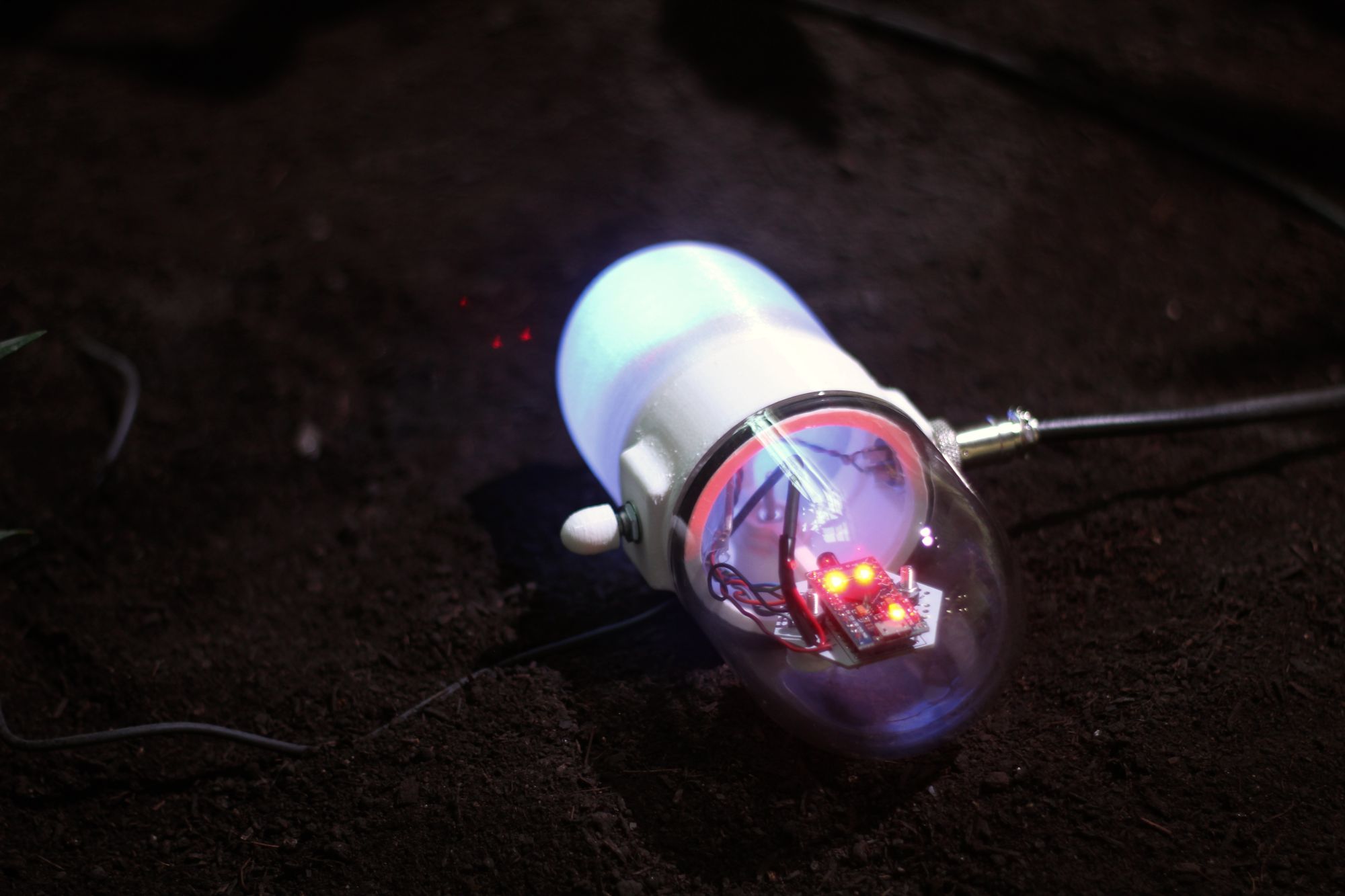
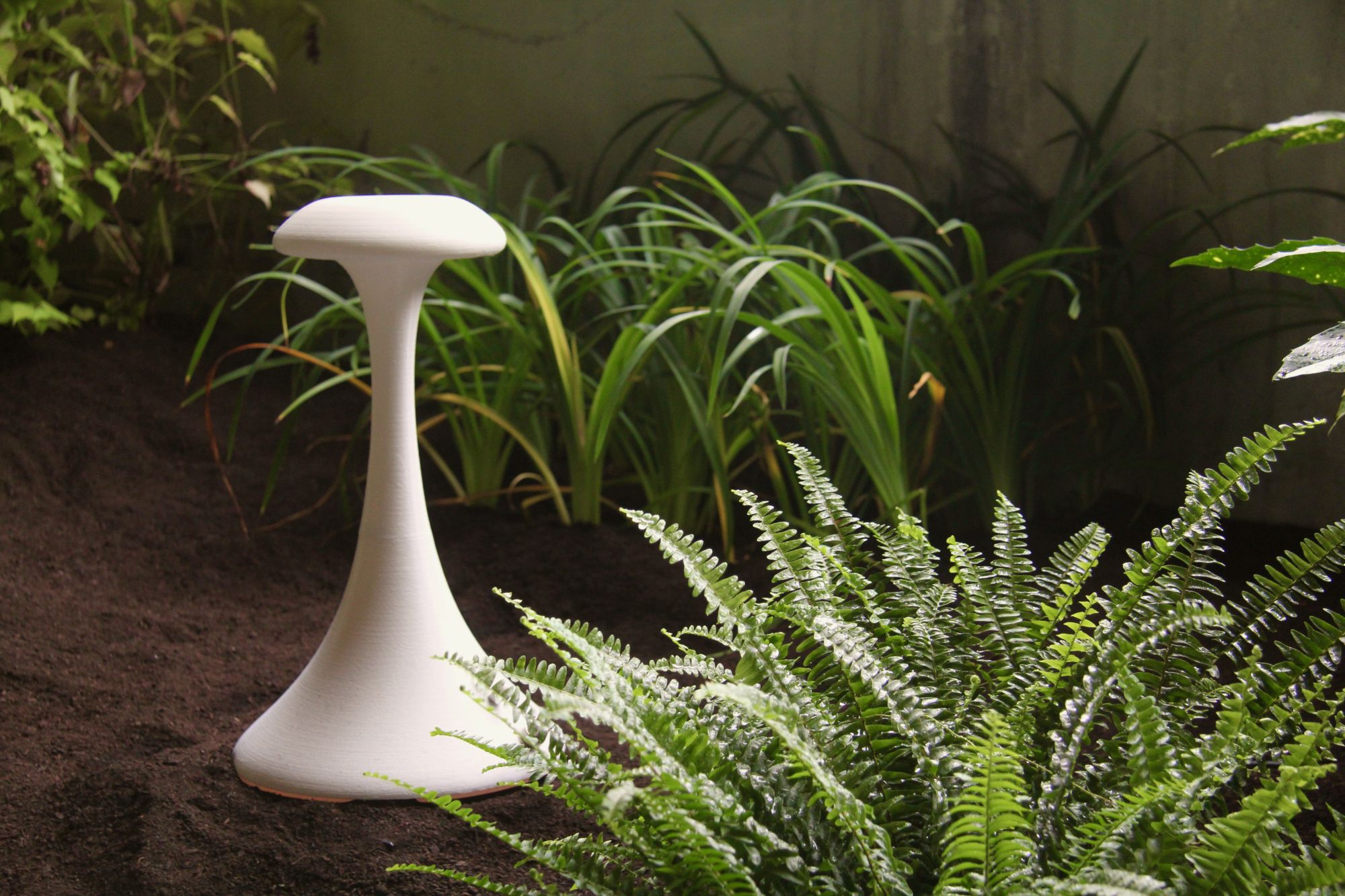
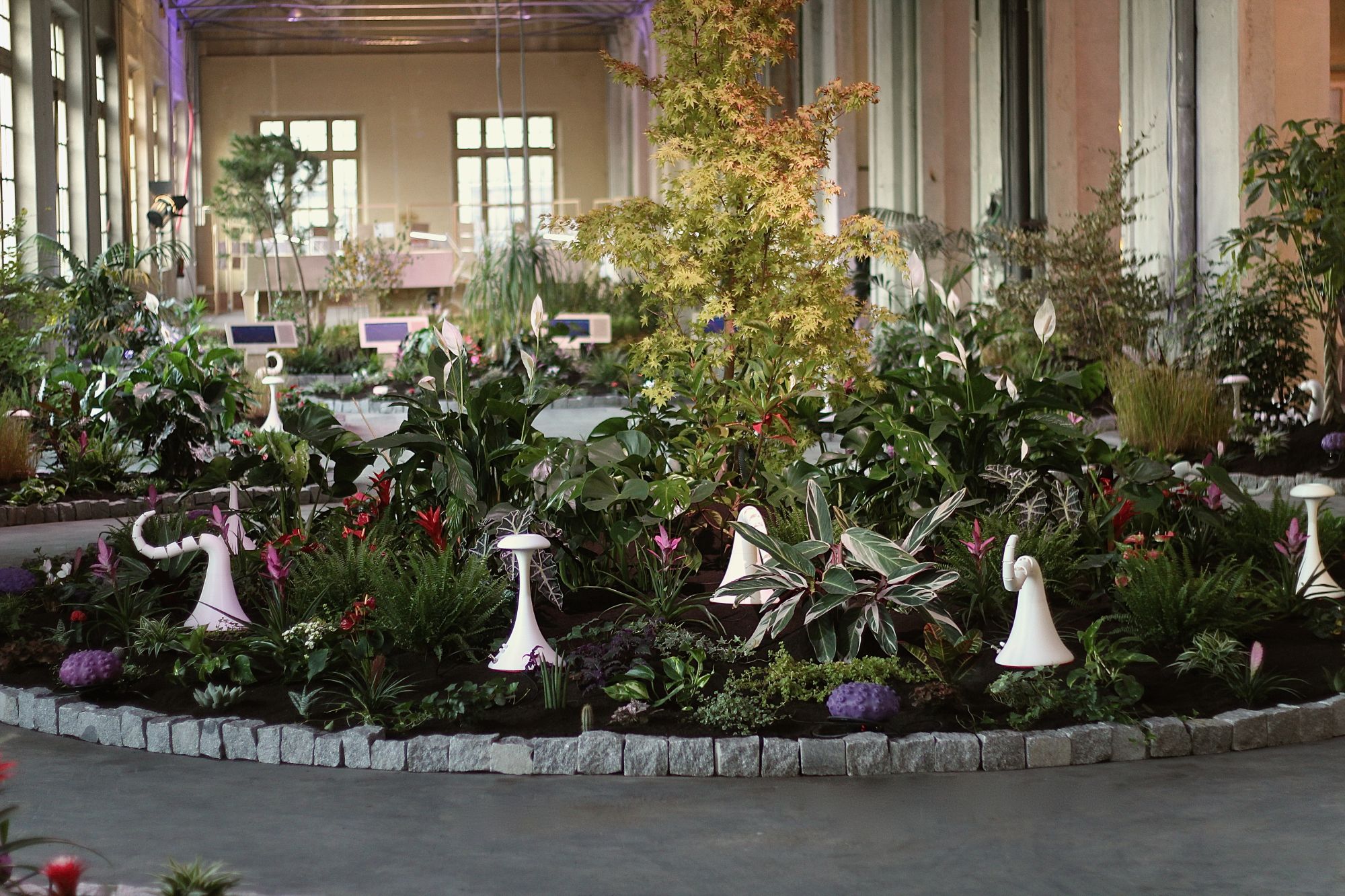
For this commission, we expanded this research into a large-scale installation: a cyborg garden in which plants, sensors, electronic systems, and robotic devices coexisted as part of a single ecosystem. The plants’ electrical activity was recorded in real time and used to activate different interfaces distributed throughout the garden, translating these signals into light, movement, vibration, and sound.

In this way, the space functioned as a hybrid, ever-changing organism, whose behaviour emerged from the interactions between plants, environmental conditions, technological devices, and the presence of the public.
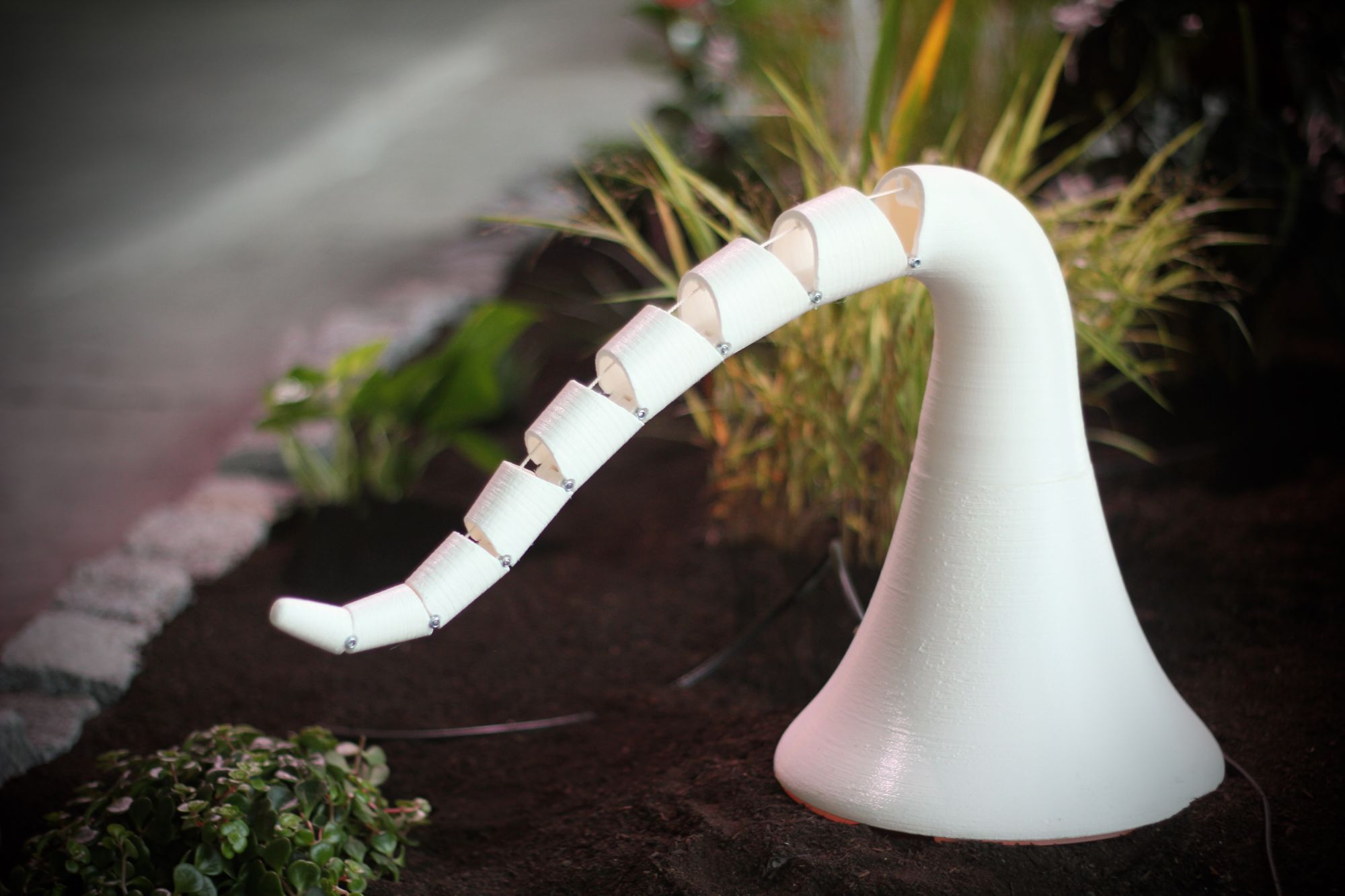
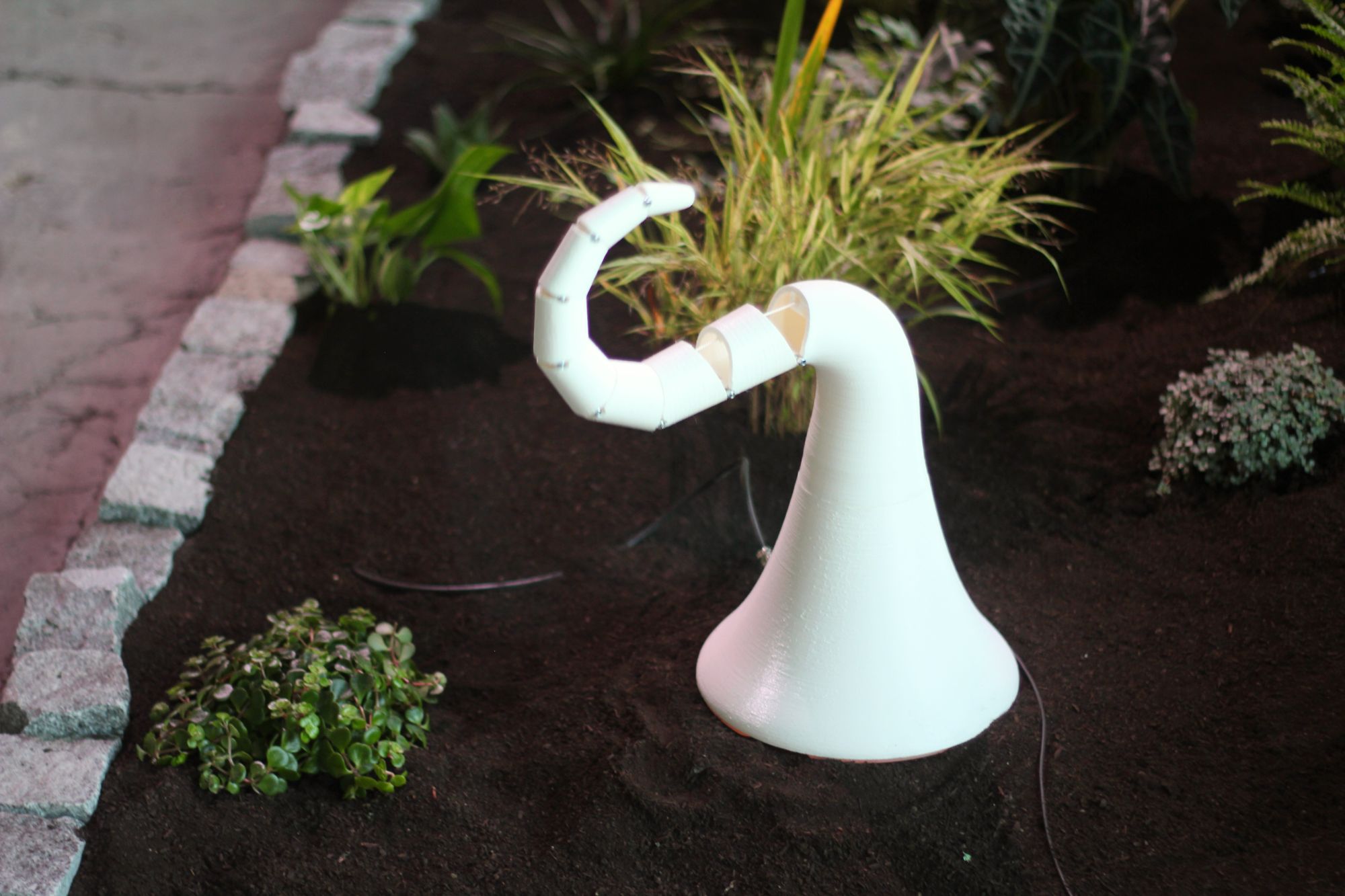
Distributed throughout the vegetation, different devices translated the activity recorded from the plants into stimuli perceptible to the human body. The garden incorporated tactile and haptic interfaces, light-based devices, tentacle-like robotic actuators, and sound systems, each responding through a different sensory language.

Some devices produced vibrations that could be perceived through touch; others changed their light intensity, generated sound, or produced organic movements among the vegetation. Together, these interfaces formed a sensory ecosystem in which the same biological activity could take on different physical manifestations.

Technology was thus integrated into the garden as part of a hybrid ecology that expanded the possibilities for interaction between plants, machines, and human bodies.
 

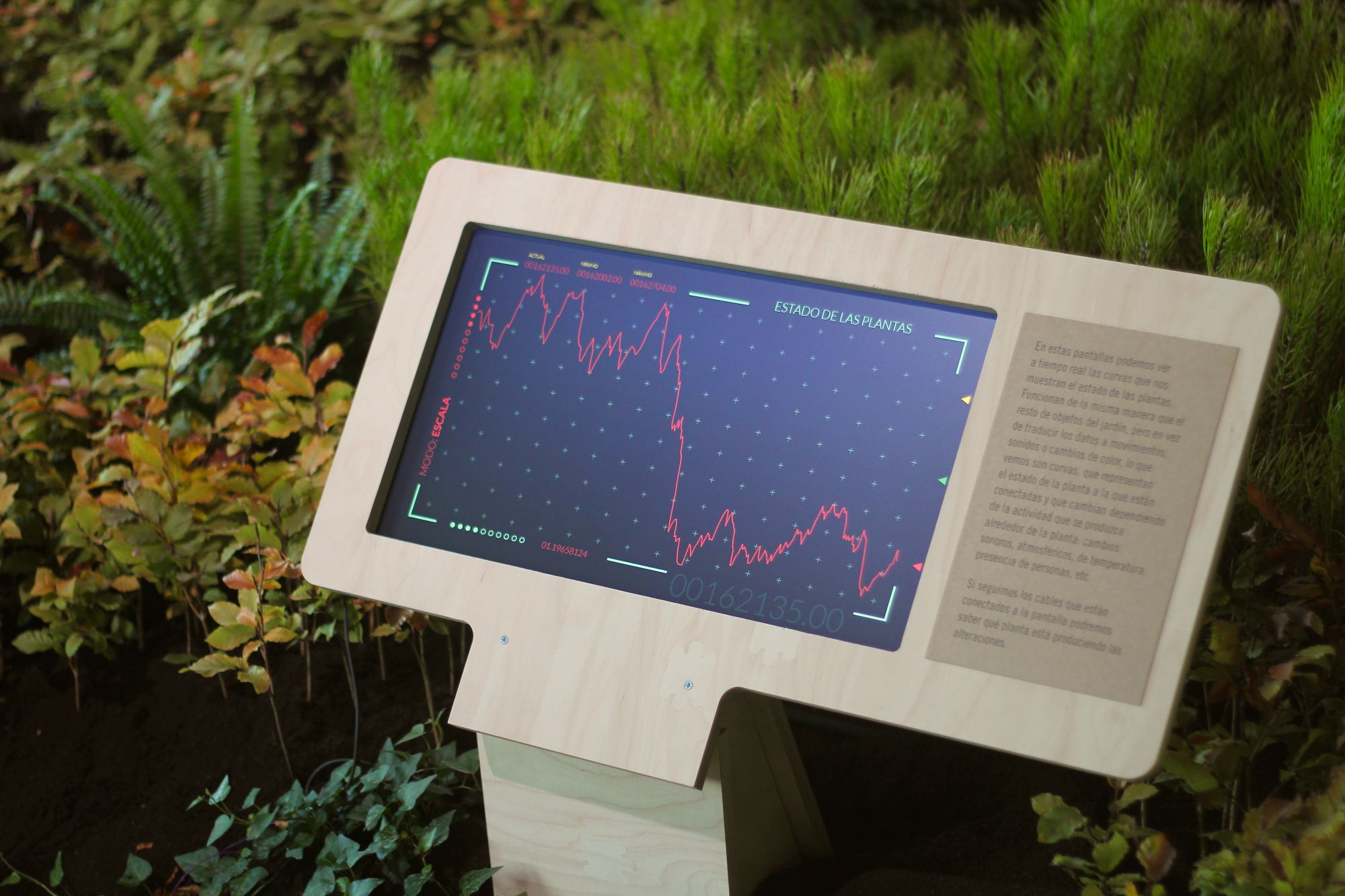
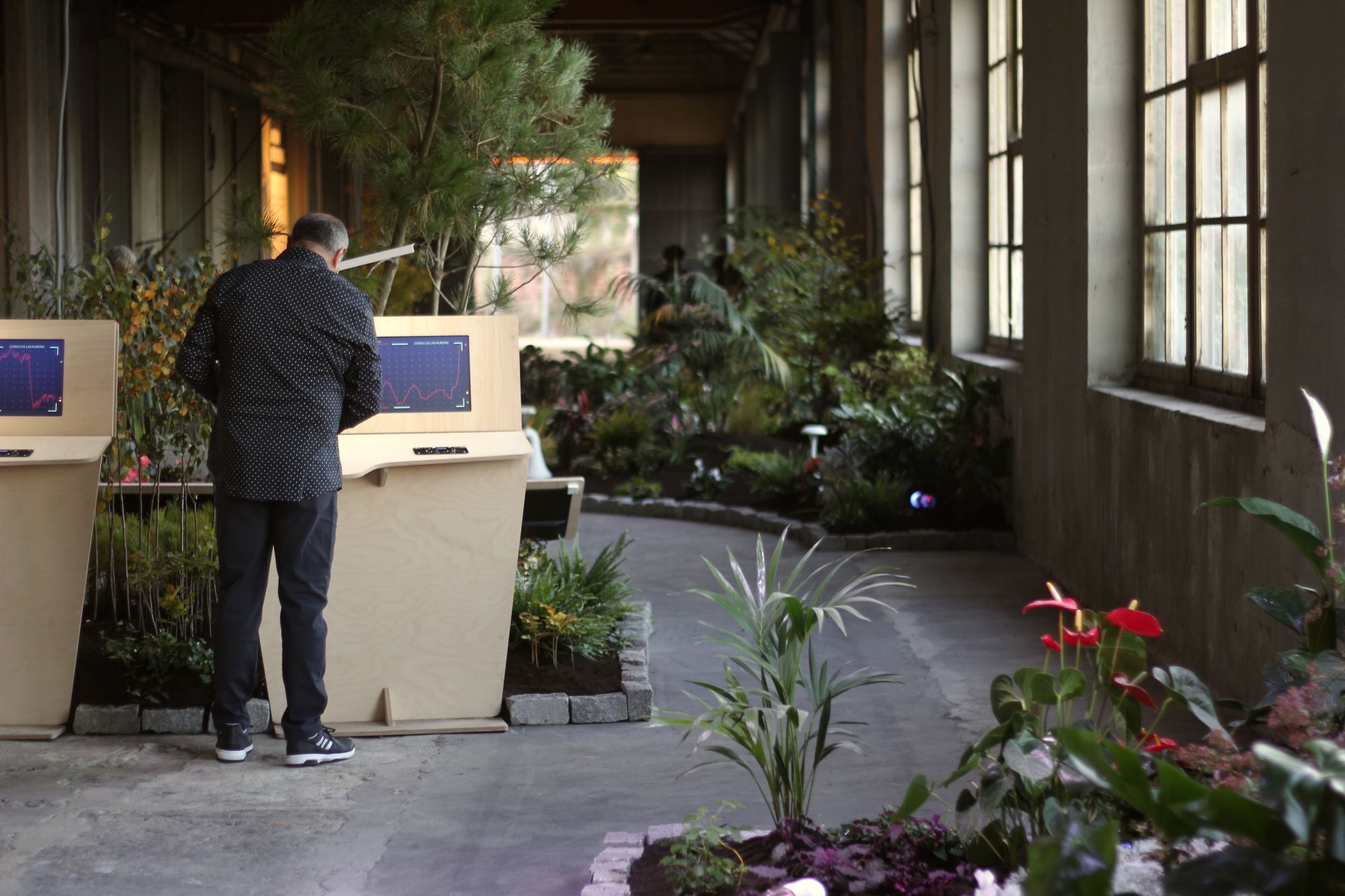
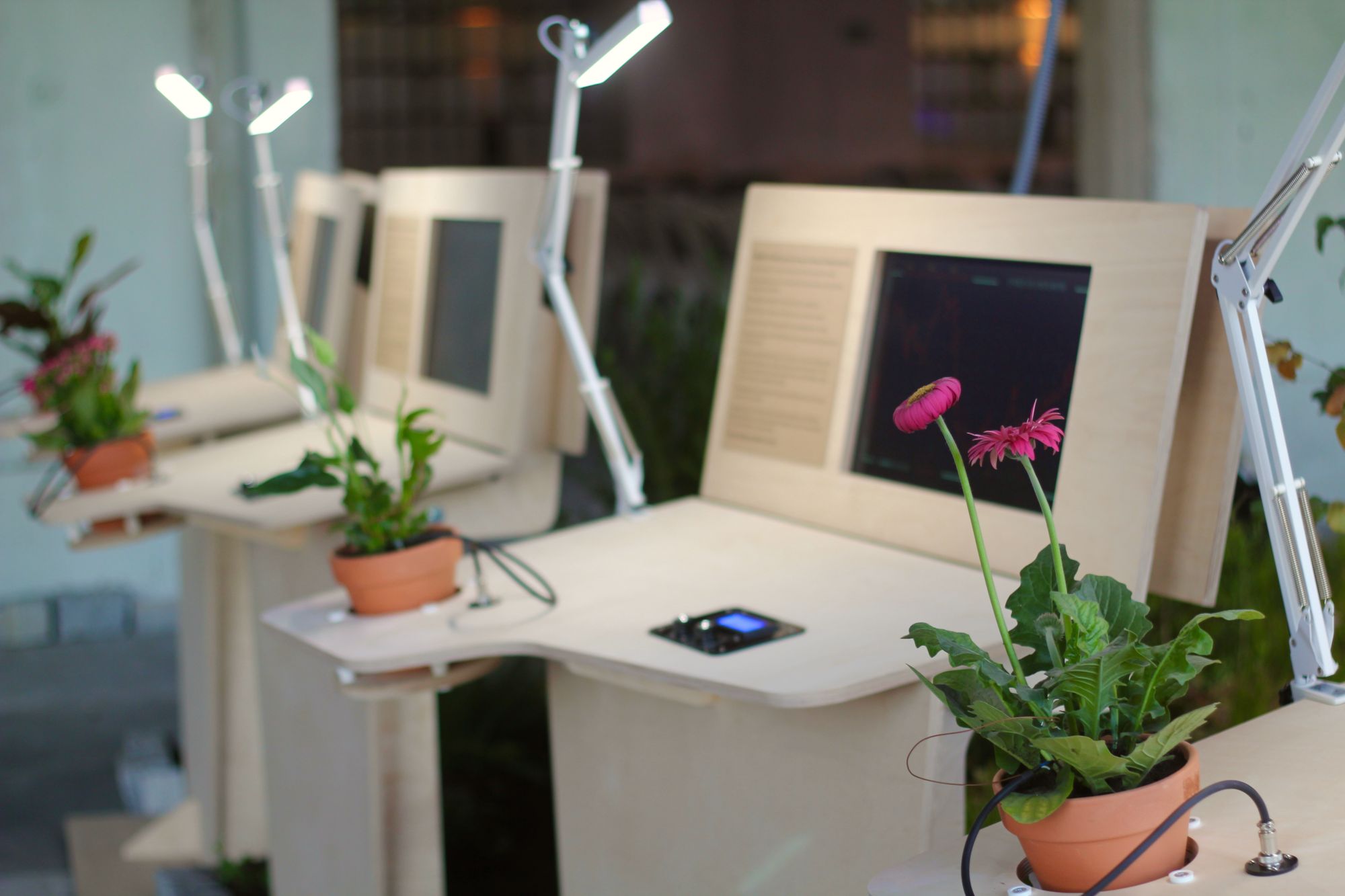
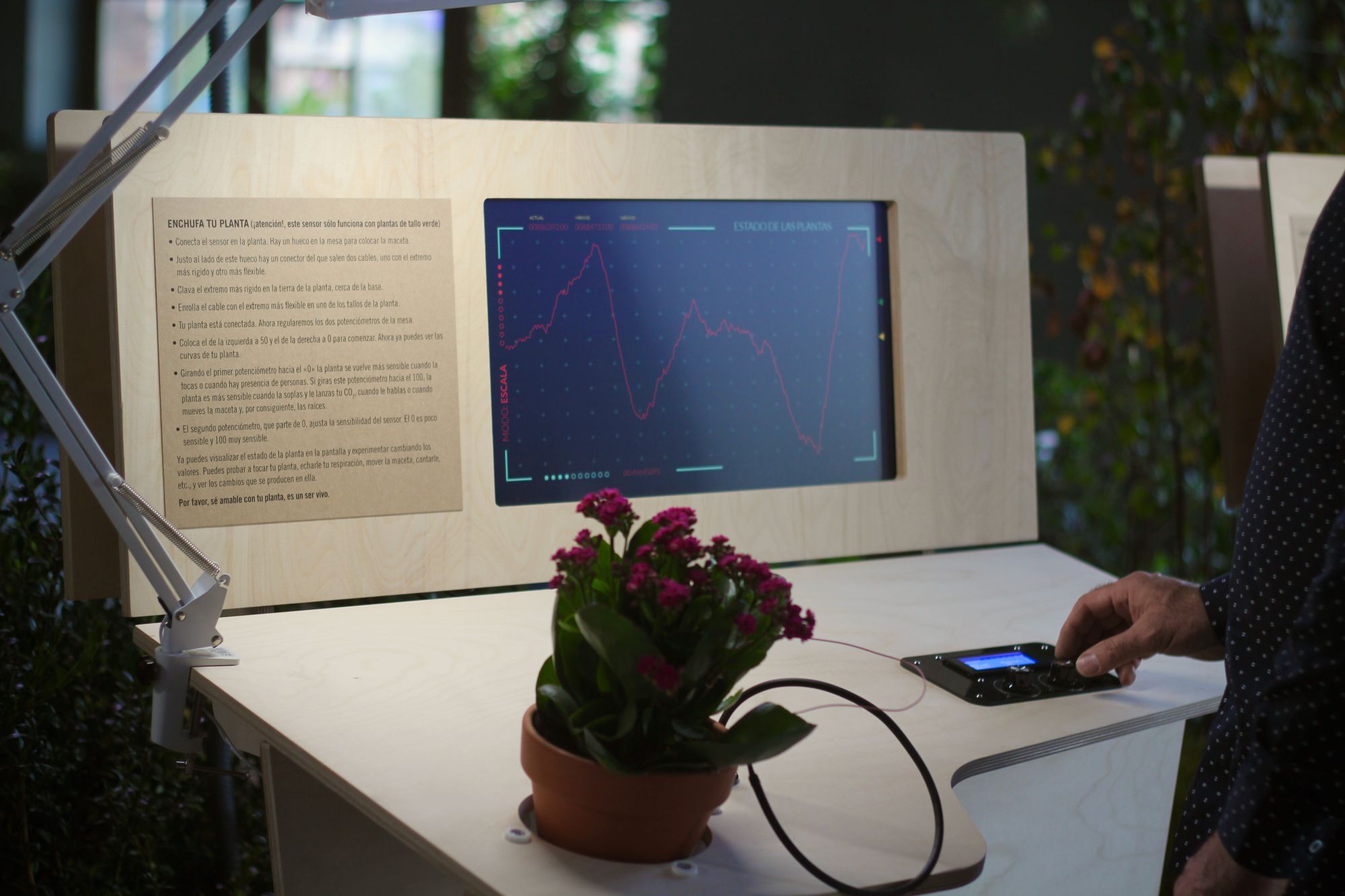
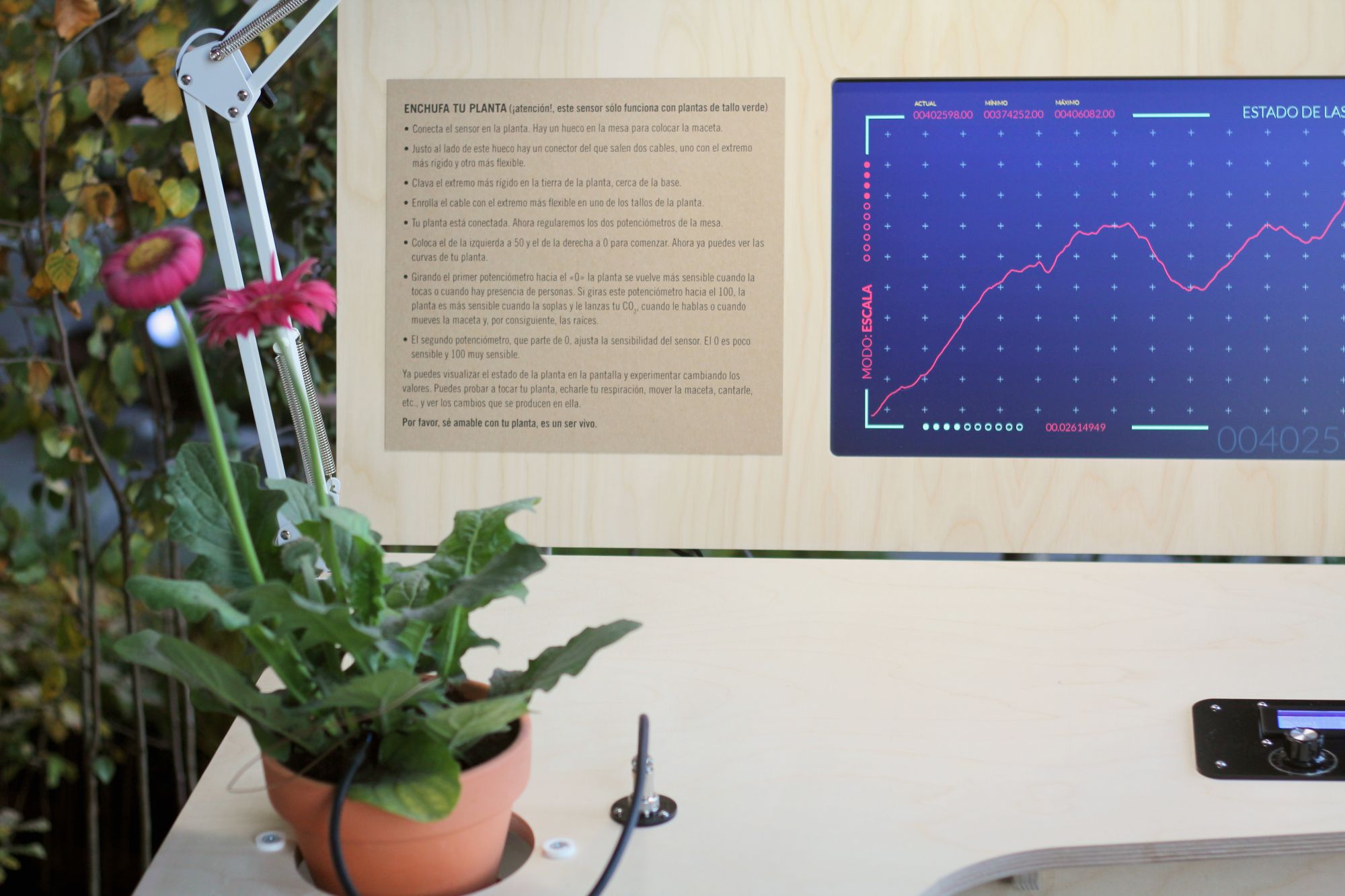
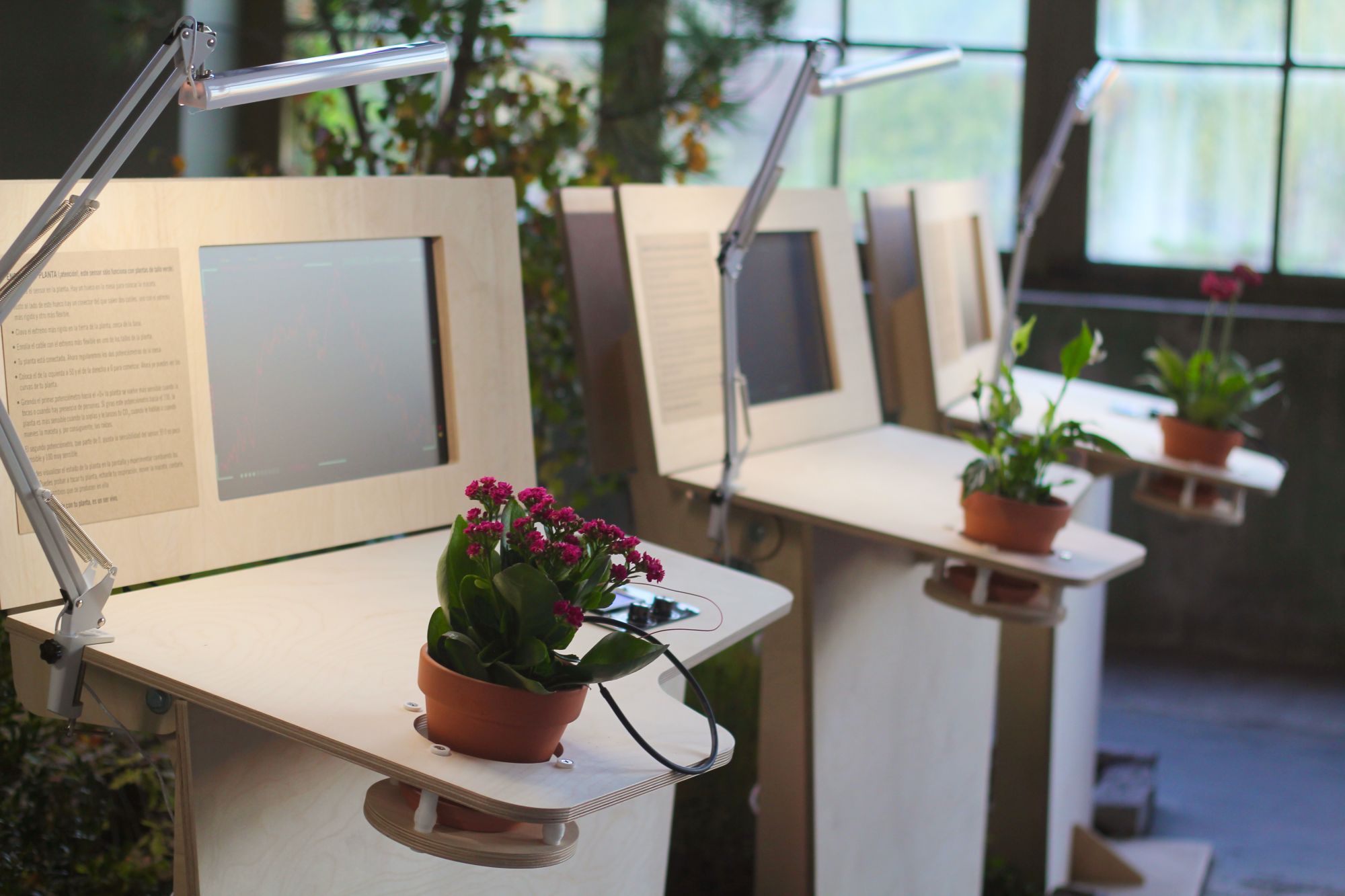
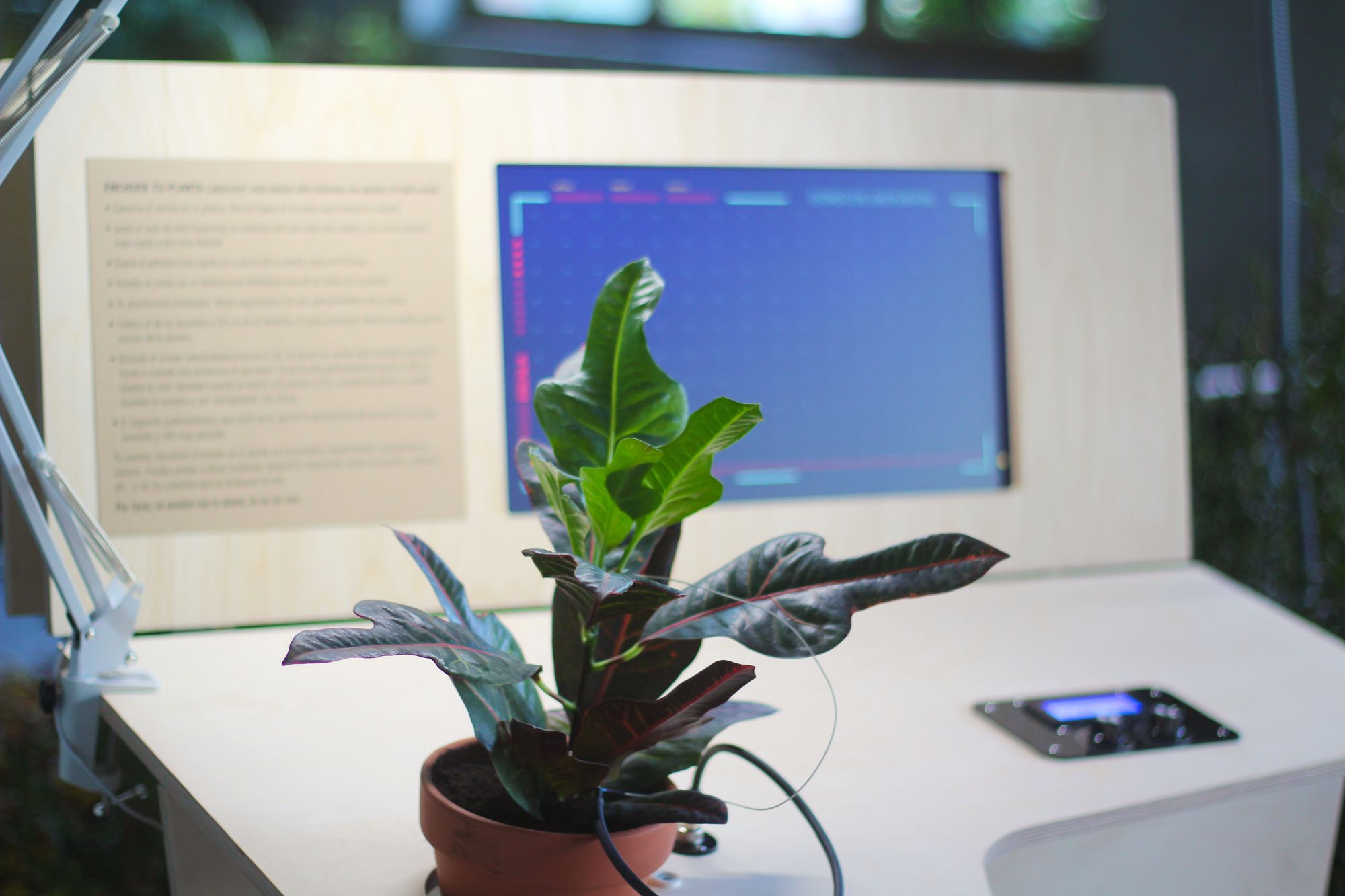
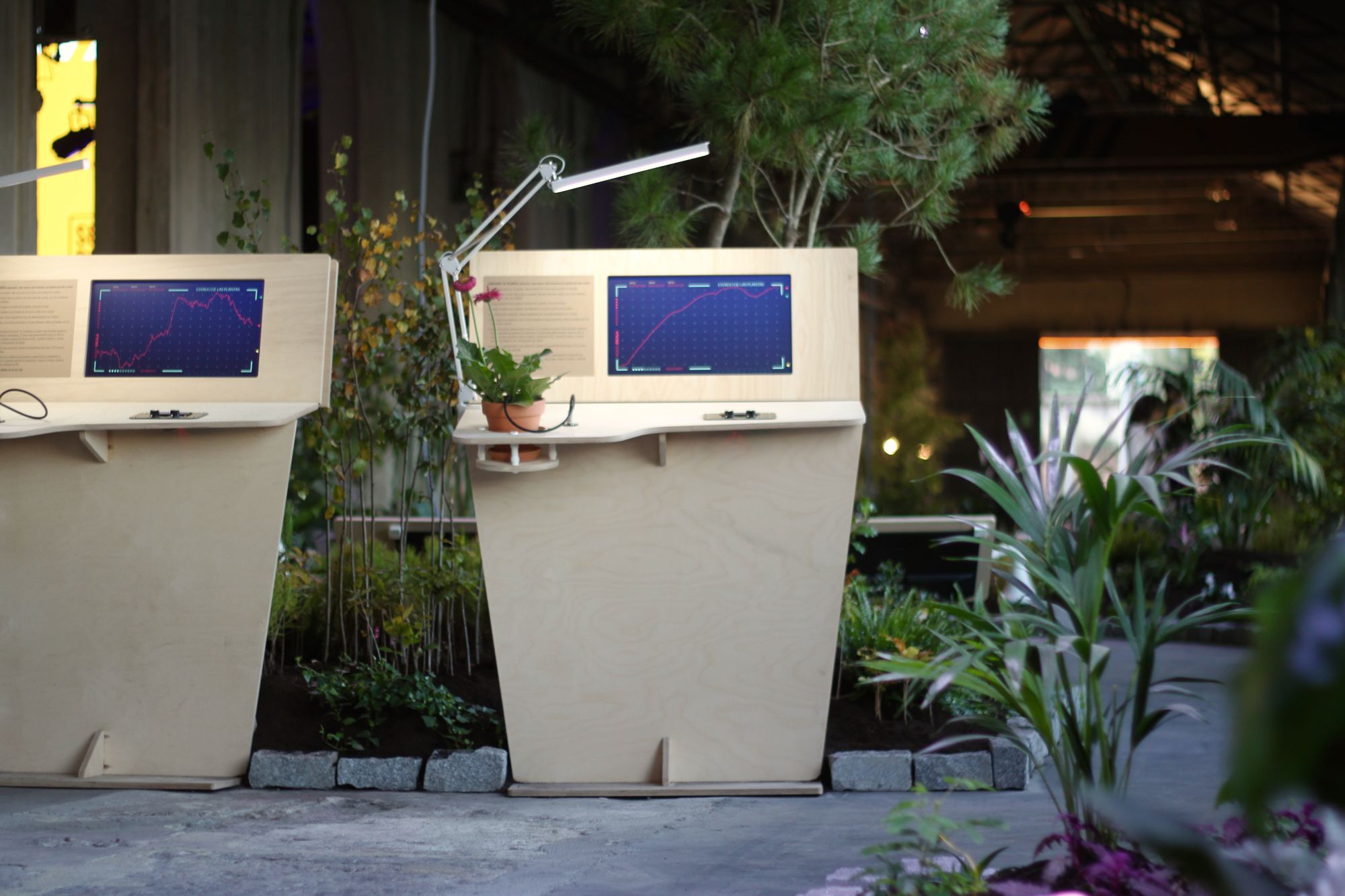
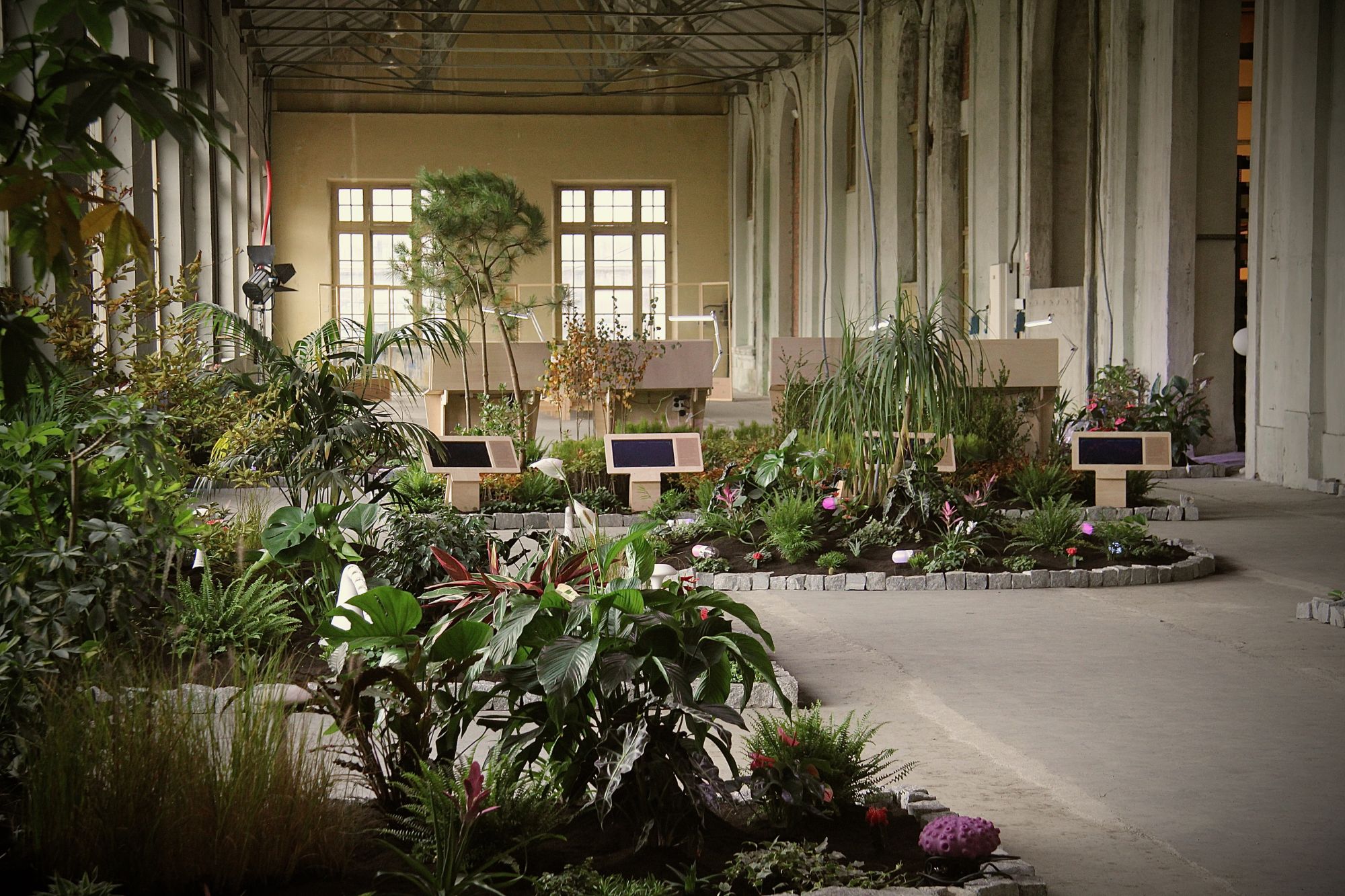
In a specific area of the garden, several plants were individually connected to monitoring systems. In front of each plant, a screen displayed variations in its electrical activity in real time, making visible a process that normally remains beyond our perception.

These stations made it possible to observe how the signals changed continuously and how variations could occur in relation to environmental conditions and the interactions taking place around the plants.

This small garden thus functioned as an observation space within the installation, offering a more direct approach to the signals that fed the broader technological ecosystem of Jardín Sensorial.
The project also incorporated an educational space conceived as an open laboratory, where the public could experiment directly with the system developed for the installation.

During the workshops, participants brought their own plants, connected them to sensors, and observed their electrical activity on screen in real time. The experience enabled visitors to move from contemplating the garden to actively participating in the experimental process, making the tools and methodologies used in the project accessible to the public.

This dimension extended Jardín Sensorial beyond the exhibition installation, turning part of the project into a shared space for observation, experimentation, and learning.
← Previous
Open Environmental Kit
Next →
The Plants Sense