Work

Other Intelligences. Interspecies Plant–Human Dialogues

2020
← All works Work

Other Intelligences is an artistic research project that investigates remote communication between plants, with the aim of gaining a deeper understanding of the language and behaviour of these living beings with whom we co-inhabit the planet.

Concept
María Castellanos
Production
María Castellanos & Alberto Valverde
Technology
Alberto Valverde
Postdoctoral Supervisors
Kristin Bergaust y Stefano Nichele, Oslo Metropolitan University. Norway
Funding
Developed within the framework of the FeLT project at Oslo Metropolitan University (Norway), as part of María Castellanos' practice-based postdoctoral research.

This work was produced with the support of a 2020 Leonardo Grant for Researchers and Cultural Creators from the BBVA Foundation. The BBVA Foundation is not responsible for the opinions, statements, or contents of this project, which are the sole responsibility of its authors.
Other Intelligences is a project developed within the framework of María Castellanos' practice-based postdoctoral research. Throughout this period, the work evolved as an ongoing process, structured around the creation of a neural network of plants connected via the internet from different locations around the world. Each plant was monitored through the measurement of its electrophysiological activity, together with environmental sensors that recorded changes in its immediate surroundings and their possible relationship to plant behaviour.
A growing body of scientific research suggests that plants exhibit chemical processes comparable to those of the animal nervous system, opening the possibility of understanding them as living organisms capable of memory and learning. Building on this premise, the project explored plant intelligence as the basis for constructing a remote communication network. To this end, an algorithm was developed to facilitate the exchange of signals between plants through processes of training and stimulus-response interaction. The research focused on pattern recognition, with the aim of enabling each plant to identify which of the other plants in the network it was communicating with, thereby generating a form of interspecies dialogue.

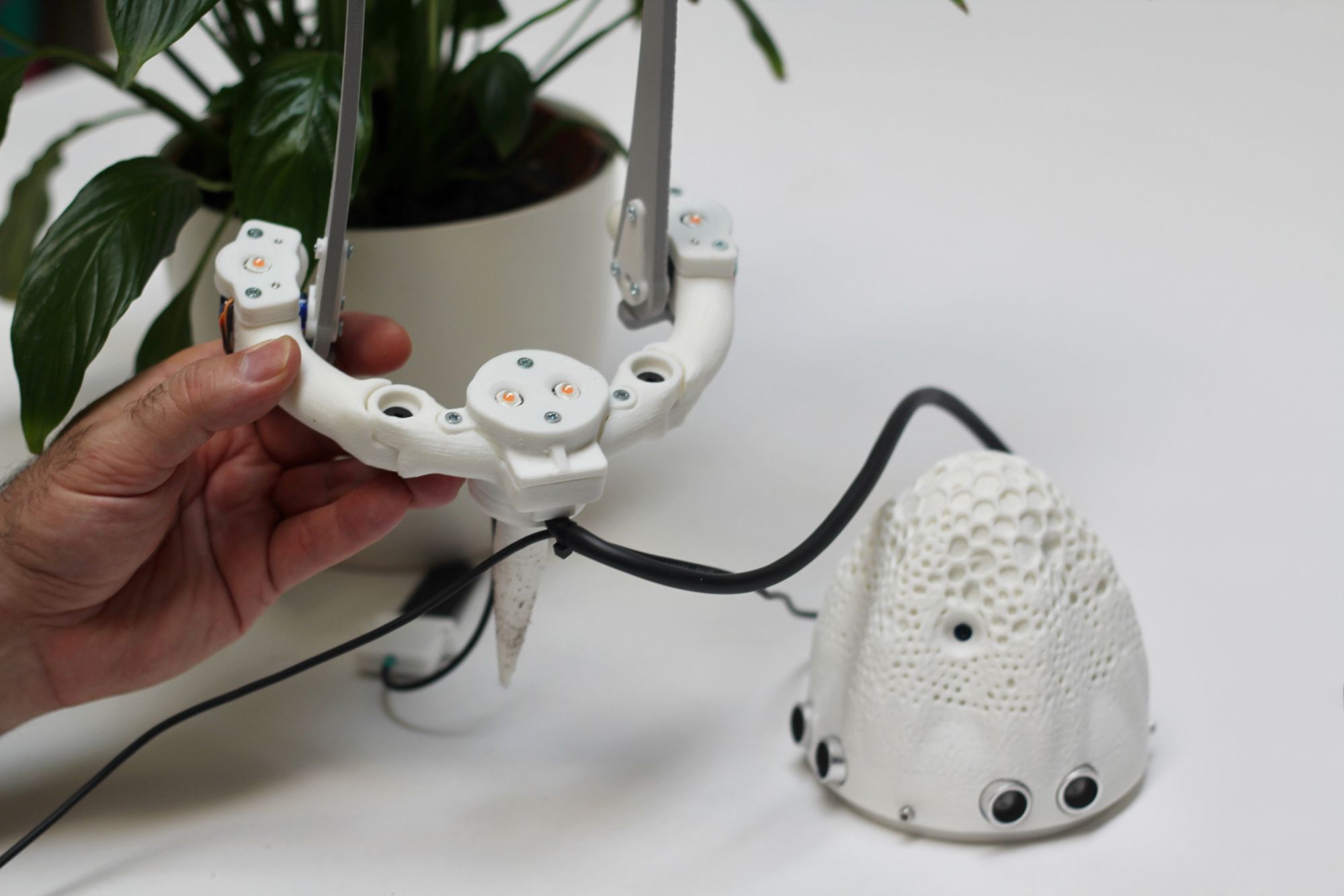
Each plant was equipped with devices that enabled it to send and receive stimuli in the form of light, sound, and movement. The entire communication process was recorded and subsequently analysed using artificial intelligence systems to detect patterns that would not be perceptible to the human eye.

By employing technology as a mediating tool, the project established a network of interconnected plants that draws an analogy with the underground root and mycorrhizal networks studied by Suzanne Simard, through which trees and plants exchange information and nutrients. In Other Intelligences, this network—composed of data, algorithms, and actuators—served as a platform for exploring alternative relationships between nature and technology through artistic methodologies.

The project is situated within a framework that understands species as interdependent entities connected through symbiotic relationships. From this perspective, Other Intelligences offers an exploration of the transformative processes that emerge through collaboration between biological organisms, ecosystems, and technological systems, opening new ways of understanding plant communication and our relationship with the more-than-human world.

Sensors

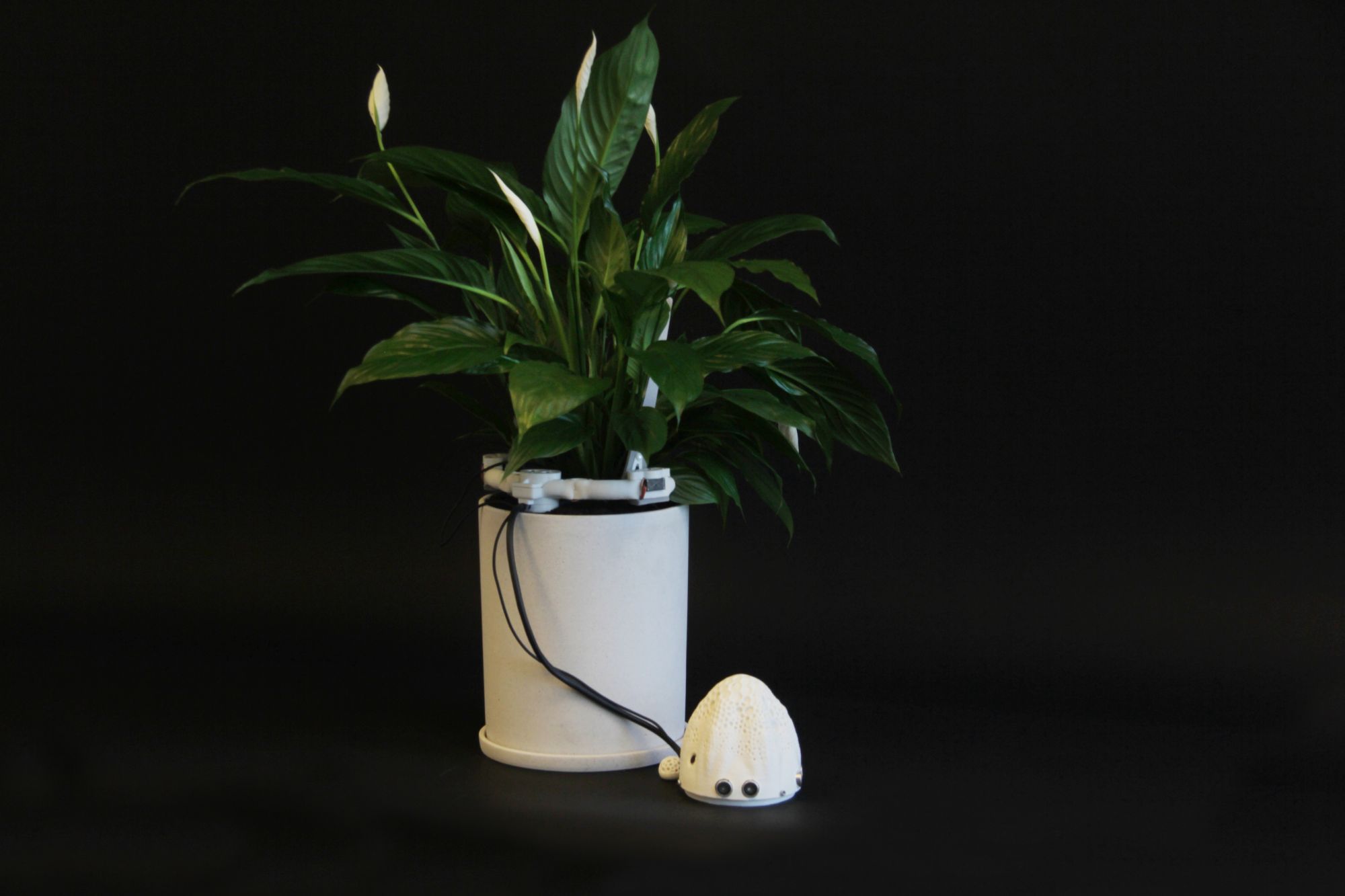
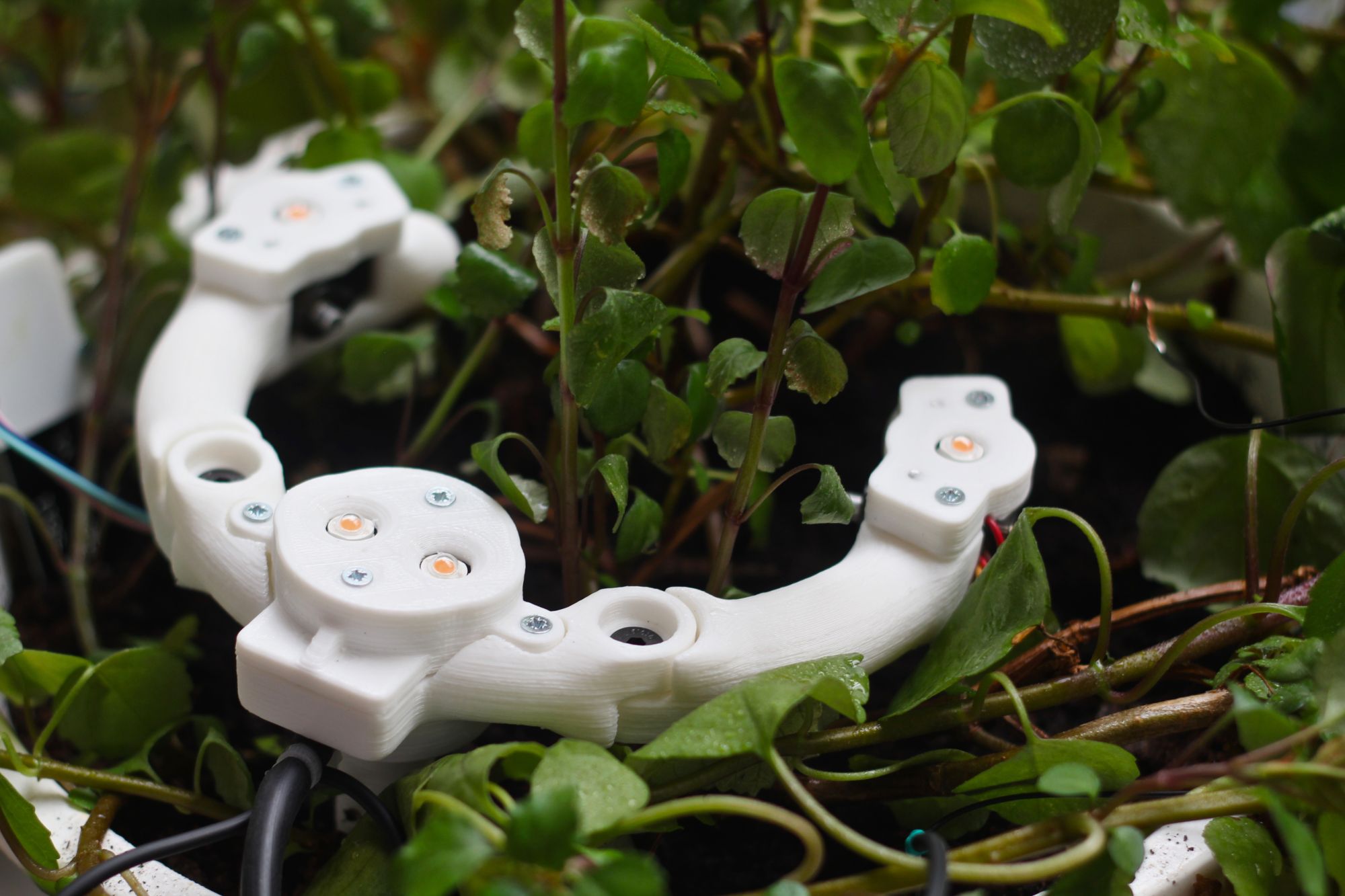
The device incorporates a sensor developed by the artists, called Chlorophyll 3.0, which enables the recording of plants' electrical oscillations. Throughout the research process, we observed that these electrical variations are closely related to the surrounding environment: changes in light, temperature, sound, and atmospheric pressure all influence the plants' activity. This sensor has previously been used in projects such as Symbiotic Interaction (2017), The Plants Sense (2018), and Beyond Human Perception (2020). A demonstration of how the sensor operates can be viewed at the link below.

For the first time, Chlorophyll 3.0 is combined with environmental sensors placed alongside the plant, allowing both datasets to be correlated and compared in order to investigate which environmental factors influence plant behaviour. All of this information is recorded and transmitted online, making it available for subsequent analysis.


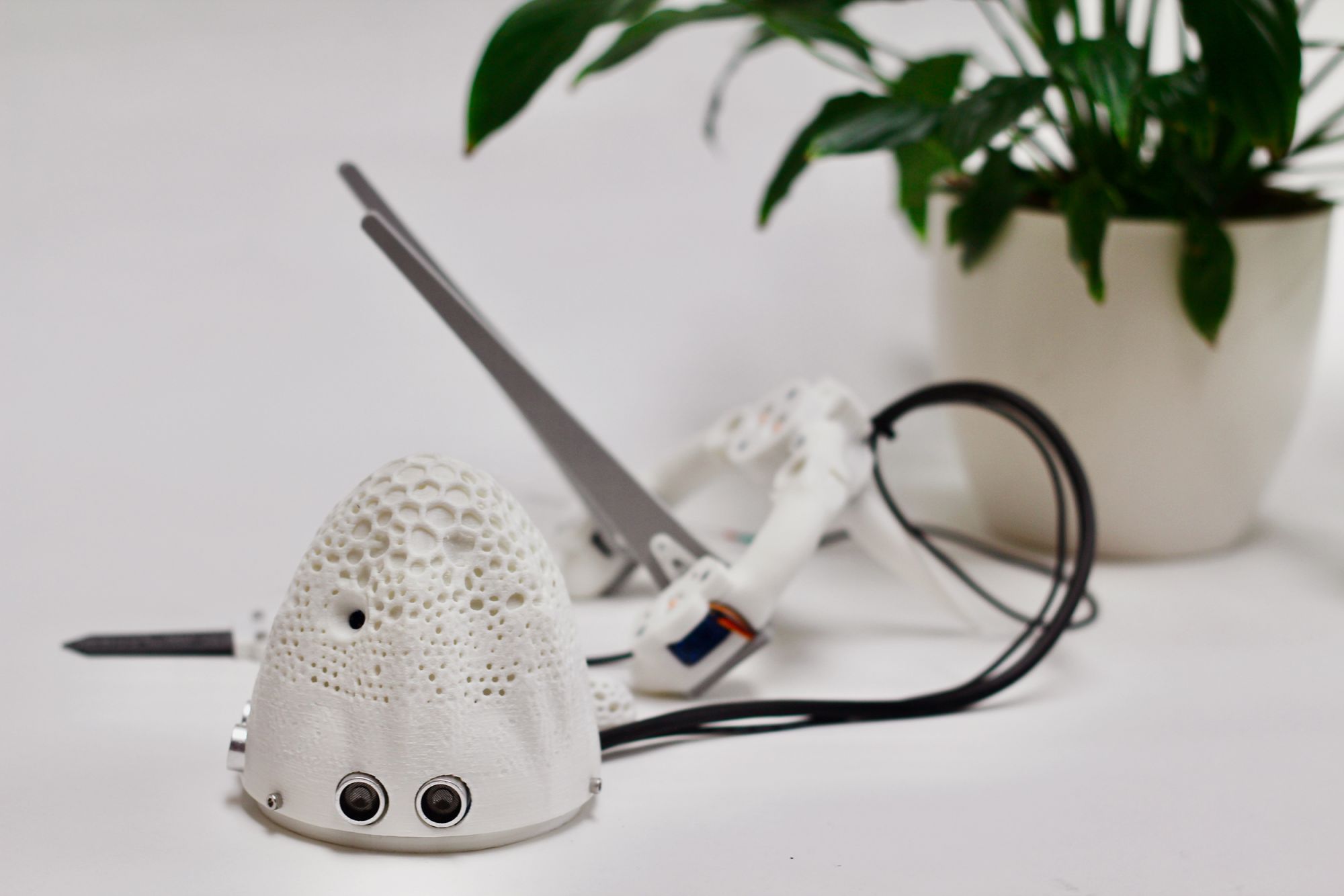
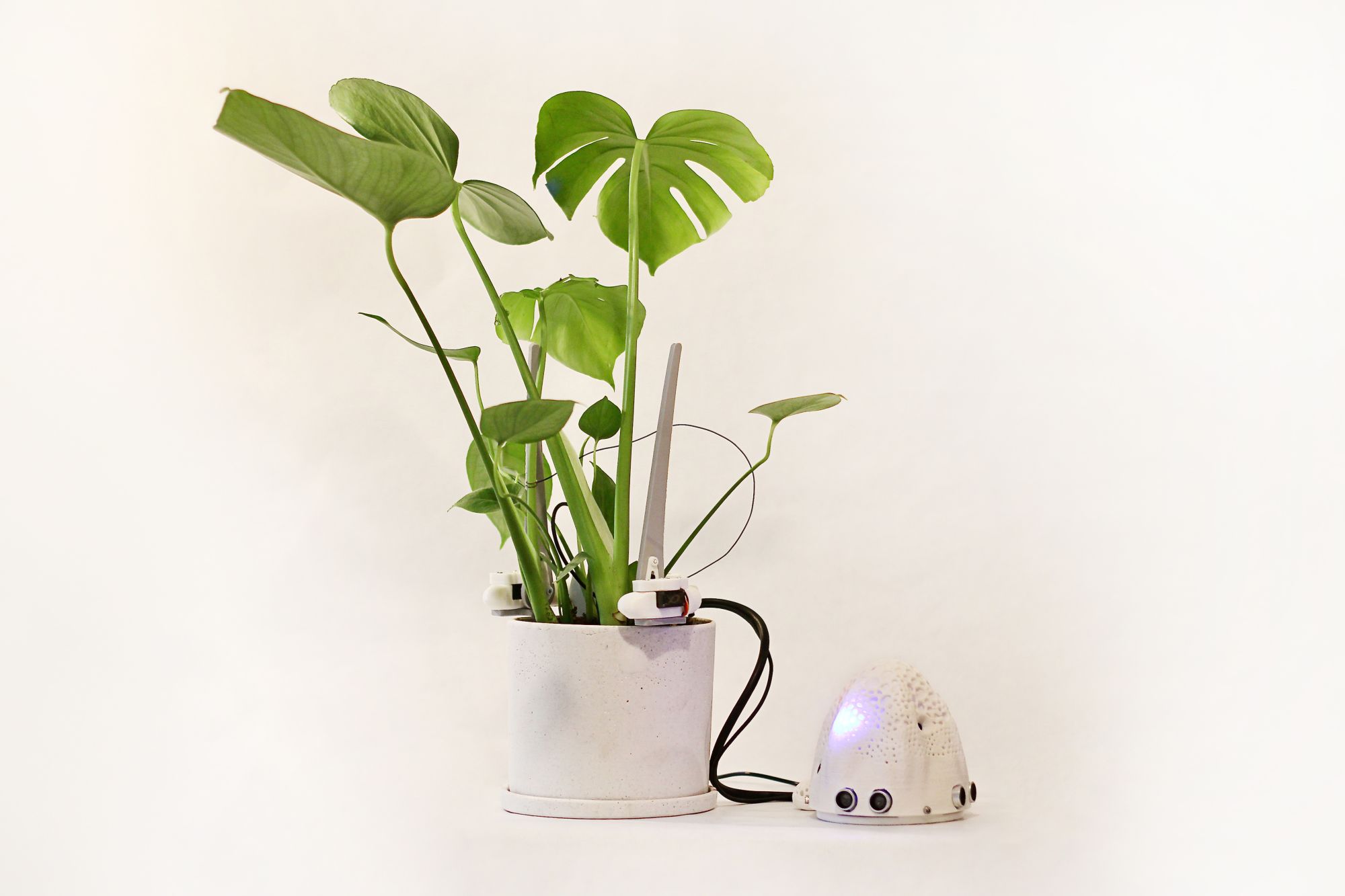
Both the Chlorophyll 3.0 sensor and the environmental sensors are integrated into 3D-printed housings specifically designed for this project. The system also incorporates a series of actuators that enable the plants to exchange signals remotely: two servo motors fitted with soft probes that gently touch the plants, LED lighting to support plant growth, and a low-frequency speaker that generates vibrations in the soil.

Plants and data

Drawing on our experience working with plants, we selected three species that we considered particularly sensitive to environmental conditions. Participants were invited to host one of these plants in their homes:

Monstera (Monstera deliciosa)
Peace Lily (Spathiphyllum)
Swedish Ivy (Plectranthus verticillatus)


The network consisted of 25 interconnected plants distributed across Norway, Spain, Mexico, Belgium, the United Kingdom, and Denmark.

To facilitate participation, we developed a simple guide explaining how to connect the sensor to the plant and to the internet, allowing all data to be shared in real time. Each plant, however, required a specific calibration, as they did not all respond in the same way. This calibration was carried out remotely through a custom control panel designed specifically for the project.

Once the plant had been connected and calibrated, data collection began. The data could be monitored live or explored retrospectively by selecting a specific day and comparing the plant's electrical activity with the corresponding environmental data.

Plant-to-plant communication


Our initial approach to establishing communication between plants relied on artificial intelligence. However, by understanding plants as living organisms capable of learning, we chose instead to develop our own algorithm, specifically designed to enable signal exchange and the formation of a network of interconnected plants.

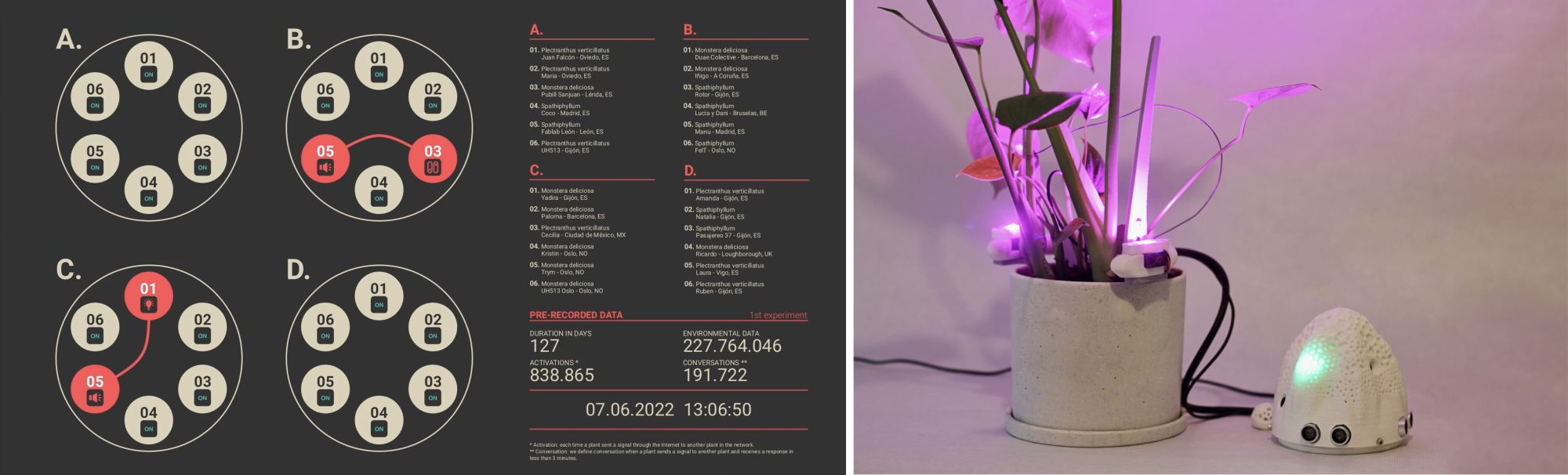
The process began by organising the plants into four groups. From there, a methodology of interaction was established: whenever a variation in a plant's electrical activity is detected, a vibration is activated in its pot, functioning as an alert that signals a change in its environment.

The plant then sends a signal—in the form of light or movement—to another plant within its group, establishing an initial form of communication. The frequency and type of signal depend on the response of the sending plant, allowing each individual to develop its own distinctive and recognisable patterns of communication.

As a result, by observing a plant receiving signals—through flashes of light or subtle movements—it becomes possible to identify which other plant is transmitting the message by paying attention to the frequency of the light, its blinking rhythm, or the way the motors are activated.

Data Visualization


In the final stage of this practice-based research, the project focused on visualising communication between plants. Throughout the entire research process, the network remained active and continued to evolve over time, gradually shifting from initially chaotic dynamics towards increasingly stable patterns of interaction.

Based on a dataset spanning 127 days of experimentation, a series of visualisations was developed to reveal these communication dynamics. During this period, 25 plants located in different parts of the world formed part of the network, where technological tools were made available to facilitate the remote exchange of signals.

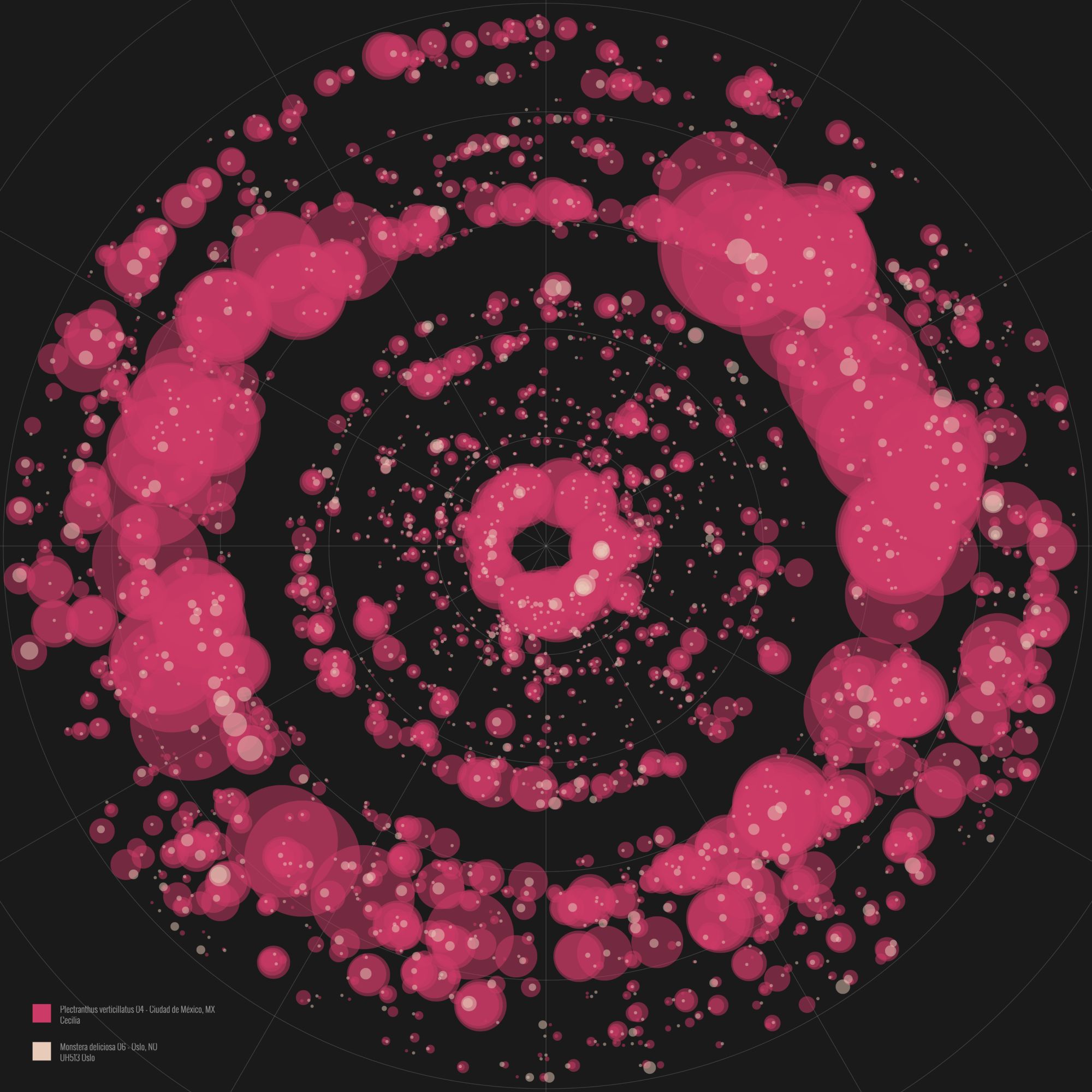
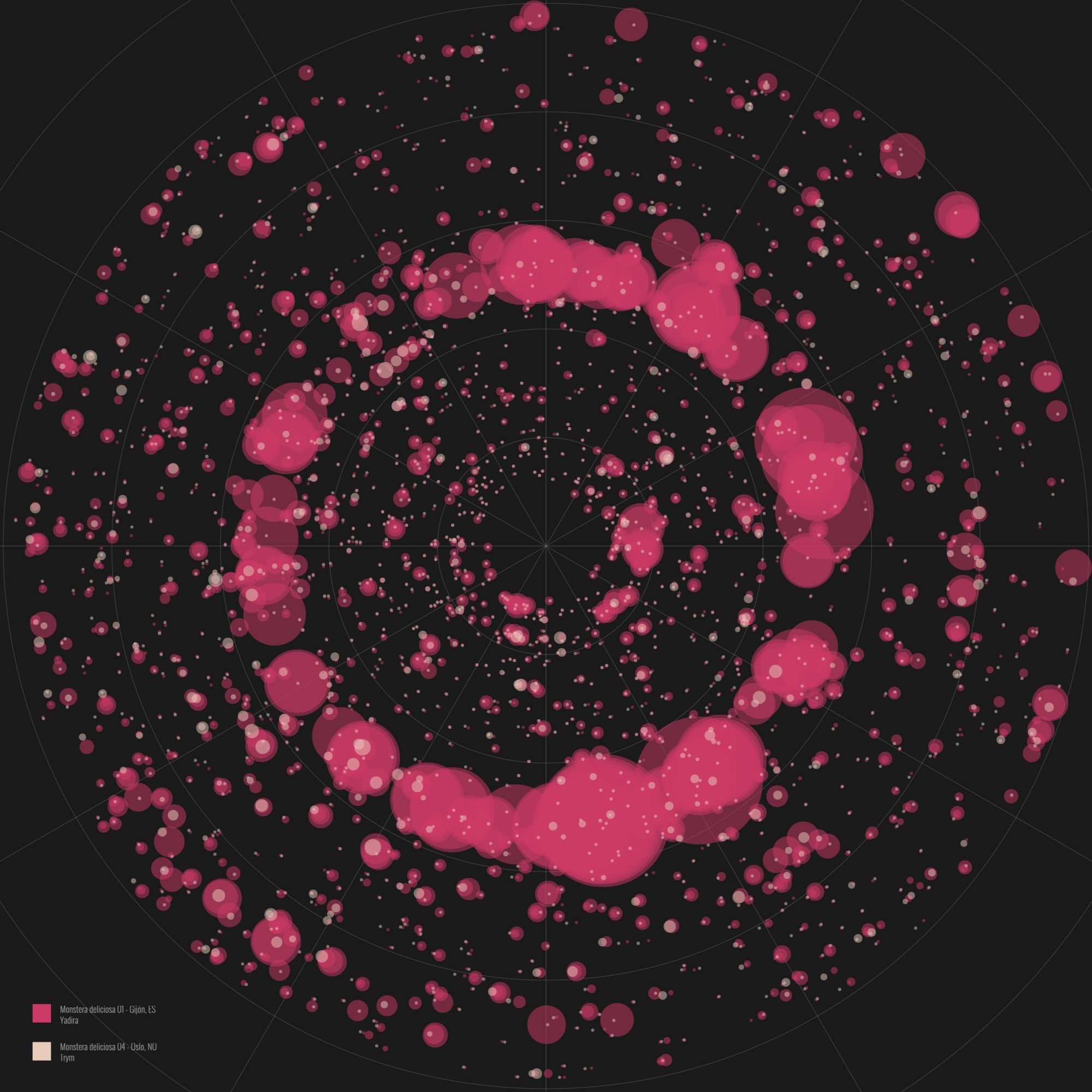
The network was organised into four groups, each consisting of six plants capable of interacting with one another through the transmission and reception of signals. The visualisations presented here depict the conversations between pairs of plants throughout the experiment. A conversation is defined as the moment when one plant sends a signal to another via the internet and receives a response within a period of less than three minutes.

Each image represents these interactions through a composition of circles. The size of each circle corresponds to the duration of the exchange: the more frequently two plants communicate, the larger their visual representation.

The visualisations are read chronologically, from the centre outwards. The core represents the beginning of the experiment, while the outermost layers correspond to the final stages of the process.

The complete series comprises 60 images, representing every possible pairwise communication between two plants within the network.
WORK EXHIBITED AT:
Otras Inteligencias. Sónar+D Festival, Barcelona (ES). 12 - 14 June 2025.
Roots & Wires. SODAS 2123, Atletika, Vilnius (LT). 7 - 14 July 2024.
Other Intelligences. Institutt for estetiske fag, PP33, OsloMet, Oslo (NO). 13 - 17 March 2023.
Other Intelligences. Methodology and process in remotely communication between plants. Galleri 69, Oslo (NO). 24 - 27 March 2022.

RELATED PRESENTATIONS:

Round Table. Arte para vivir en un planeta herido. CaixaForum, Madrid (ES). 24.04.2024.
Other Intelligences. Congress Present Research, Future Harvest, UCO, Córdoba (ES). 22.10.2025.
Compromiso con el clima: todas a la vez en todas partes. La Casa Encendida, Madrid (ES). 14.11.2023.
Test_Lab: Smart Hybrid Forms. V2_Lab, Róterdam (NL). 27.10.2022.
Other Intelligences (Work in Progress). The 5th Renewable Futures Conference, Riga (LV). 08.10.2022.
Other Intelligences. ISEA2022 – International Symposium on Electronic Art, MACBA, Barcelona (ES). 12.06.2022.


PUBLICATIONS:

Ramos, A., Castellanos, M., & Ganuza, E. (2024). Other Intelligences: Investigating the Plant-Human Relationship in Domestic Spaces. Philosophies, 9(6), 176. https://doi.org/10.3390/philosophies9060176 

← Previous
Unexpected Ecosystems
Next →
Beyond Human Perception